Our Story
Our Story
How a generalist freelance editing background turned into a team that edits nothing but real estate video.
No stock footage, no invented client names — just how this business actually started, told straight.
Where We Started
Before there was a Real Estate Video Editor, there was just freelance editing work — the kind most editors cut their teeth on. Corporate explainer videos. A few YouTube channels that needed a weekly turnaround. Small-business promo reels. It paid, it built basic skills — cutting to a beat, colour correcting mixed footage, managing a client who changes their mind twice mid-project — but none of it was a specialty. It was general-purpose editing, taken wherever it came from.
At that stage there was no plan to specialise in anything. The work moved between very different types of client from one week to the next — a SaaS company one week, a wedding videographer’s overflow the next, a local gym’s Instagram content after that. Each client wanted something different, which meant relearning conventions constantly instead of getting genuinely fast at any one type of edit. That constant context-switching is normal for a generalist freelancer, and it’s also, in hindsight, the exact thing specialising later fixed.
Why Video Editing
The appeal of editing specifically, rather than shooting or directing, was always the same: footage is raw material, and editing is where the actual decisions get made. The same ten clips can become a boring video or a genuinely good one depending entirely on order, pacing and colour — nothing about the footage itself changes. That’s a satisfying kind of craft, and it’s also one where you can measurably get better, because the output is right there to review and improve.
There’s also a practical reason editing suited the work better than shooting: it’s the stage where problems get solved rather than created. A shoot day is largely fixed once it happens — you get what you get. Editing is where a shaky handheld pan becomes usable, where mismatched lighting between two rooms gets corrected, where forty minutes of raw walkthrough becomes a ninety-second video someone will actually watch to the end. That problem-solving, done well, is invisible to the viewer — which is exactly the point.
Discovering Real Estate
Real estate wasn’t a deliberate niche decision at first — it arrived through referrals. A photographer client asked for help cutting drone footage into a listing video. Then another. Then a small brokerage asked for the same thing on a recurring basis. What made the work stick, compared to the corporate and YouTube jobs, was that it had rules — MLS format requirements, unbranded export requirements, a hard deadline tied to a listing going live — and almost nobody serving that market was treating those rules as seriously as they deserved.
That was the actual discovery: not that real estate video was creatively interesting, but that it was an underserved, rules-heavy niche full of clients being handled by editors who didn’t specialise in it. Every other niche the team had touched — corporate, YouTube, small-business promo — was already crowded with editors who understood those formats cold. Real estate, at the time, wasn’t.
It also turned out to be a niche with a genuinely repeatable structure: a listing video, a walkthrough, a drone establishing shot, a vertical reel cut-down. Once that structure was understood properly, the same workflow applied to the next client, and the next, in a way freelance corporate work never did.
First Challenges
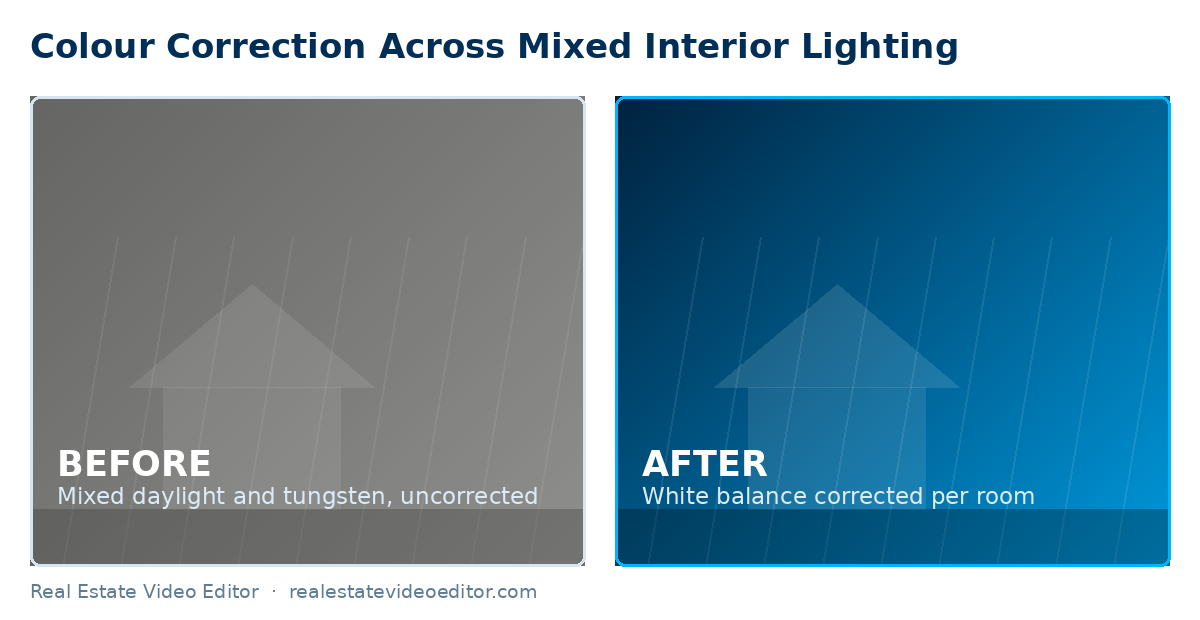
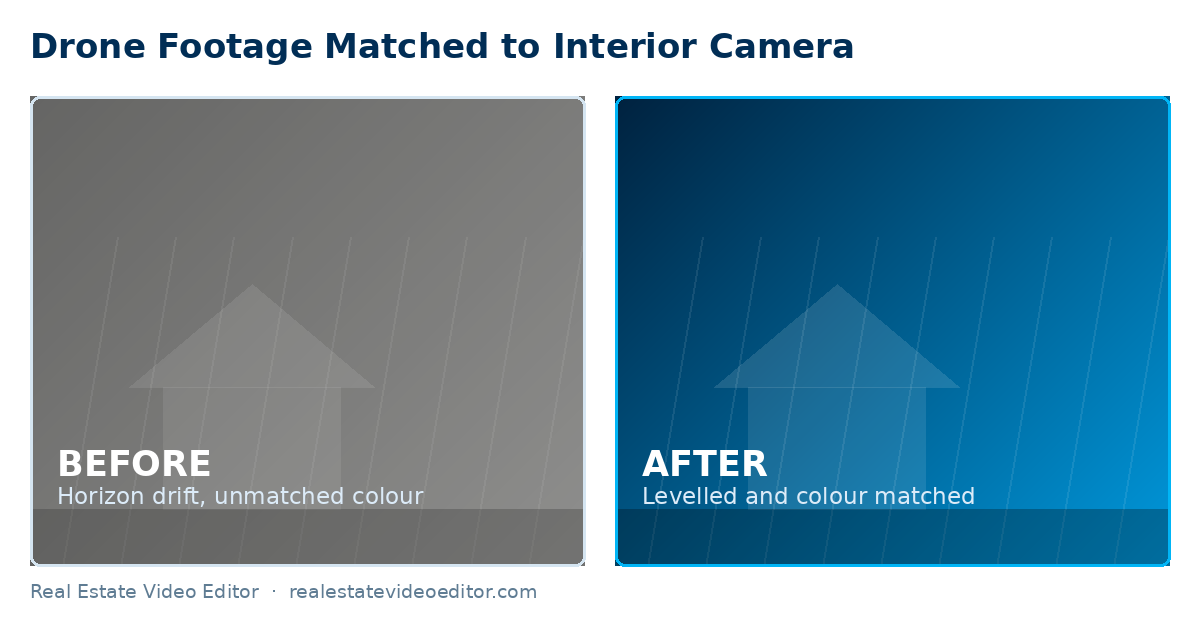
The early real estate jobs exposed gaps fast. The first real problem was colour matching — drone footage shot in a flat log profile next to interior footage shot on a completely different camera and white balance. Cut together without correction, it looked like two different properties. That meant learning waveform and vectorscope-based colour matching properly, not eyeballing it.
The second problem was format. An early client rejected a delivered listing video because it had the photographer’s watermark burned into a version meant for MLS syndication, which doesn’t allow branding. That was an expensive lesson in reading platform requirements before delivery, not after.
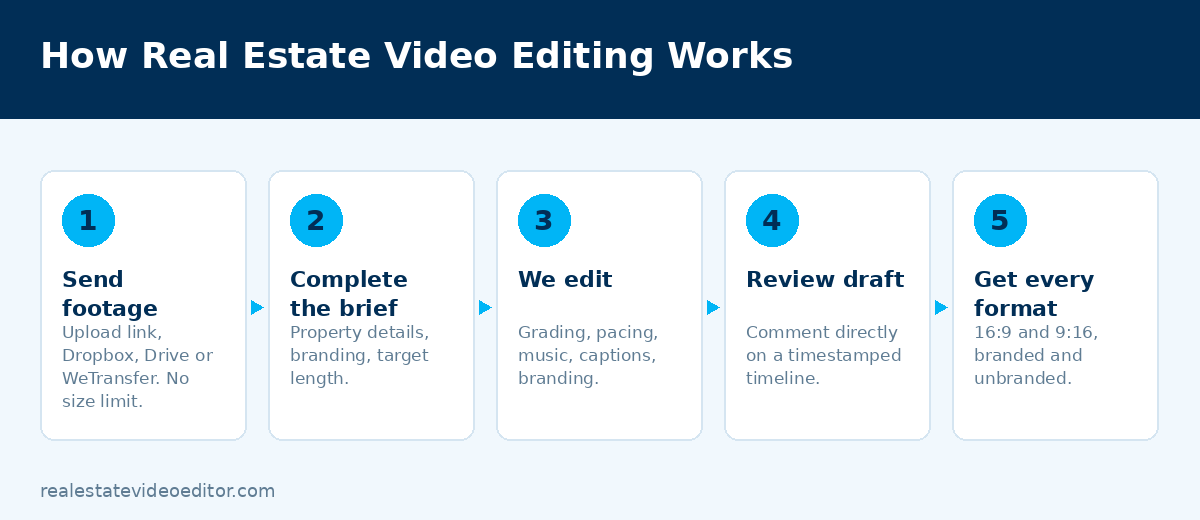
The third was turnaround. A property video delivered a week after the listing went live is close to useless — by then the agent has already run their launch campaign without it. Early jobs were sometimes late, usually because too many unrelated jobs were being juggled in the same week. Fixing that meant rebuilding the whole workflow around a fixed 24–48 hour promise rather than “whenever it’s ready” — and, eventually, dropping non-property work entirely so that promise was actually keepable.
None of these were dramatic failures. They were the ordinary, unglamorous mistakes anyone makes moving from generalist to specialist work — and each one directly shaped a rule the business still runs on today.
Lessons Learned
- Specialisation beats general skill. Being a competent generalist editor was worth less to real estate clients than being someone who already knew the MLS export rules cold.
- Turnaround is a feature, not an inconvenience. Agents don’t reward the best edit — they reward the best edit that arrives before the deadline.
- Colour matching is not optional. It’s the single fastest thing to get wrong and the fastest thing that makes an edit look unprofessional.
- Format compliance has to be checked, not assumed. Every platform — MLS, Instagram, YouTube, TikTok — has different, non-obvious rules, and getting them wrong costs a client real money.
- Saying no to non-property work was necessary, not just tidy. Turnaround promises only hold up if capacity isn’t split across unrelated client types.
These aren’t abstract principles pulled from a business book — each one traces back to a specific job that went wrong first. That’s also why they show up, almost word for word, in the editing philosophy on the About page: they’re not marketing language, they’re the actual rules the team operates by.
Building This Website
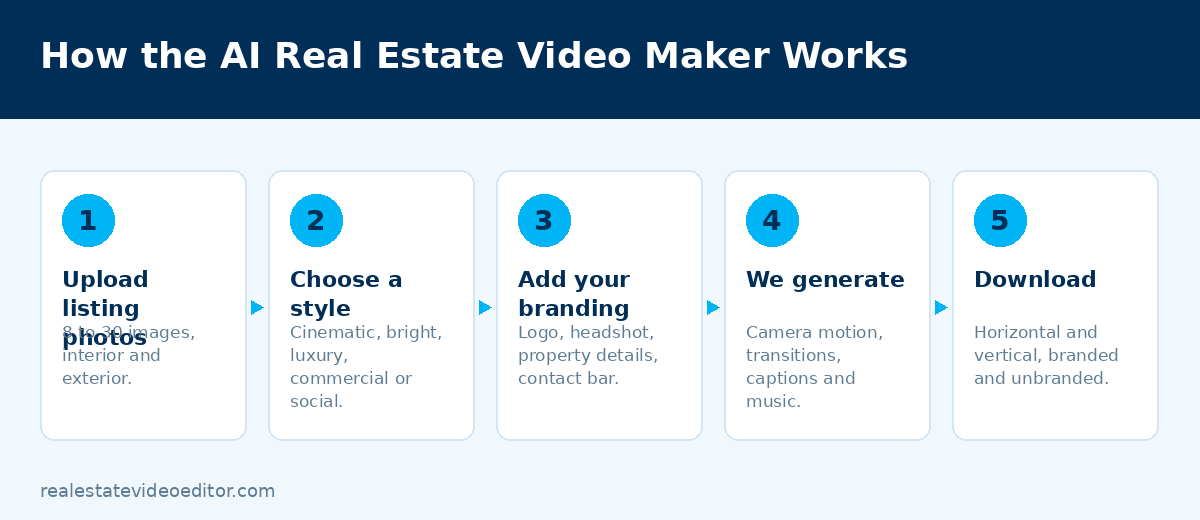
Once real estate video editing had become the entire business rather than one client type among several, the next step was formalising it — a dedicated brand, a dedicated site, and a team structure built around property work specifically instead of freelance overflow. That’s what realestatevideoeditor.com is.
The resource library came out of the same instinct that built the client base in the first place: most of what makes real estate video good or bad is a small set of concrete, teachable rules — shot lists, colour workflow, format specs, turnaround expectations. Publishing that openly, rather than treating it as a trade secret, was always the plan once there was a site to publish it on.
Building the site also forced a decision the team had never had to make explicitly before: what to say publicly about proof. It would have been easy to fill the site with stock testimonials and invented case studies — most competitor sites in this space do exactly that. The decision, covered in full below, was not to.
Our Promise
- We will not publish fabricated proof. No stock testimonials, no invented case studies, no “client” footage that isn’t from an actual client. If you don’t see a portfolio yet, it’s because we haven’t published one we can stand behind — not because we’ve faked one instead.
- We will hit the turnaround we quote, or tell you in advance if we can’t, rather than go quiet and deliver late.
- We will tell you if your footage or photos aren’t good enough to edit well, before we take your money, rather than deliver something weak and call it done.
This is the direct result of the mistakes described above — the watermark rejection, the late deliveries, the colour mismatches. Each one is now a specific promise rather than a vague value statement, because each one was earned the hard way.
The Future
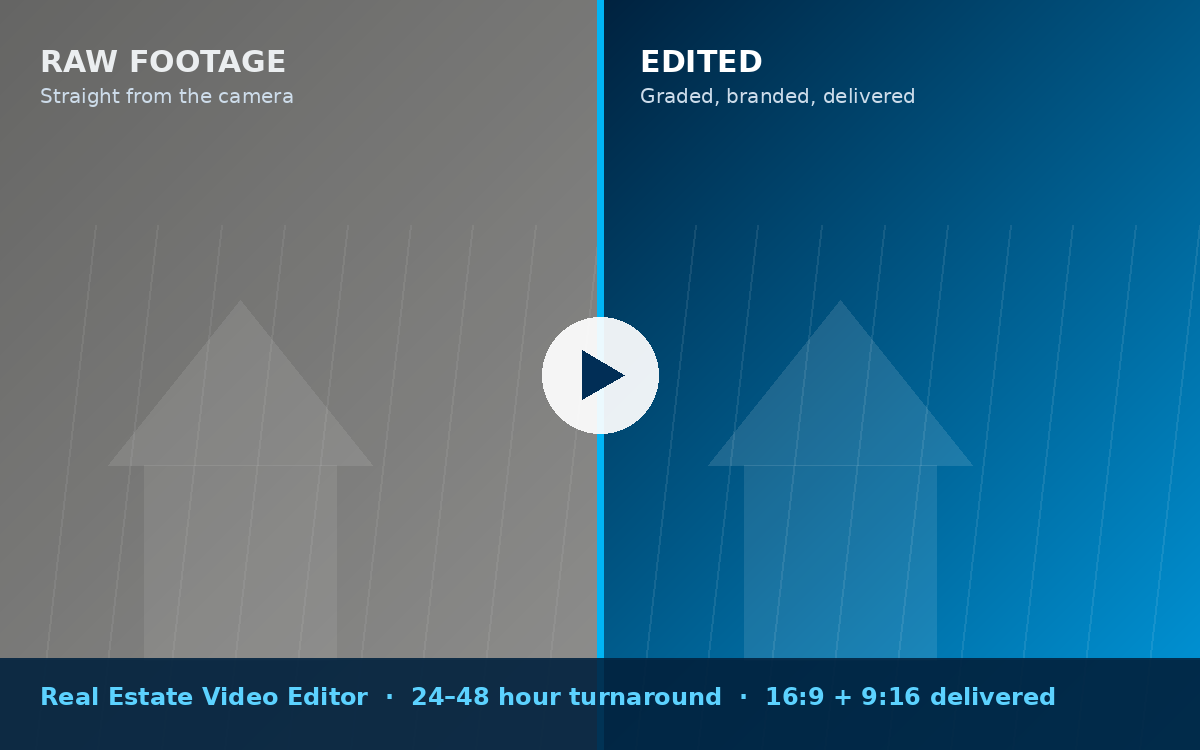
Two things are actively being built. The first is the client-facing proof this site is still missing — real case studies, named testimonials, a browsable video portfolio — added as real projects are completed and clients agree to be featured.
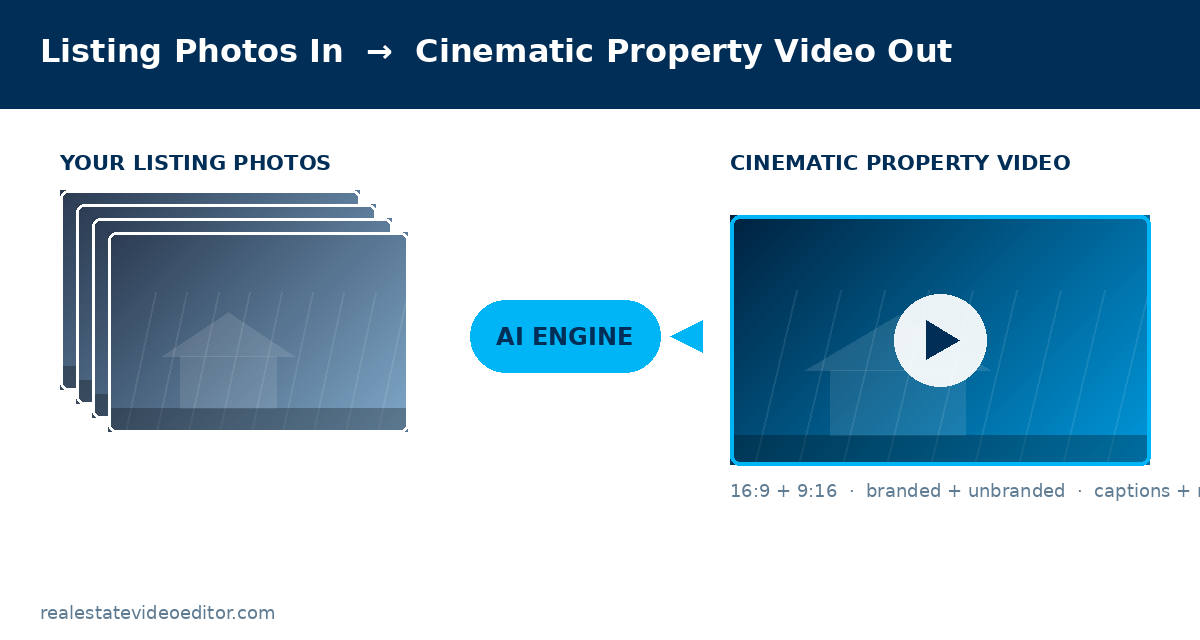
The second is the AI real estate video maker — extending the same specialisation to agents and photographers who don’t have footage at all yet, only listing photos, and need a fast first video without waiting on a full production shoot.
Both are extensions of the same original discovery: real estate video is a rules-heavy, underserved niche, and there’s more value in specialising deeply in it than in being one more general-purpose editor who also takes property jobs. Everything published on this site from here — new guides, new templates, new case studies — will be judged against that same standard.
See What This Story Led To
The service, the pricing, and real examples of the editing philosophy above in practice.
Keep reading
How to Outsource Real Estate Video Editing
What to expect from working with an outside editing team.
Specialist real estate video editors. We turn property footage and listing photographs into finished listing videos for agents, photographers and brokerages worldwide.
[email protected]
Replies within 4 business hours
Editing Services
AI Video Maker
Guides & Resources
Serving real estate agents, property photographers and brokerages in the United States, Canada, the United Kingdom, Australia and worldwide. All editing performed by a dedicated real estate video team. We do not shoot on location — everything is remote and digital.
- © 2026 Real Estate Video Editor
- Privacy Policy
- Terms of Service
- Acceptable Use
- Refund Policy
- AI Transparency